

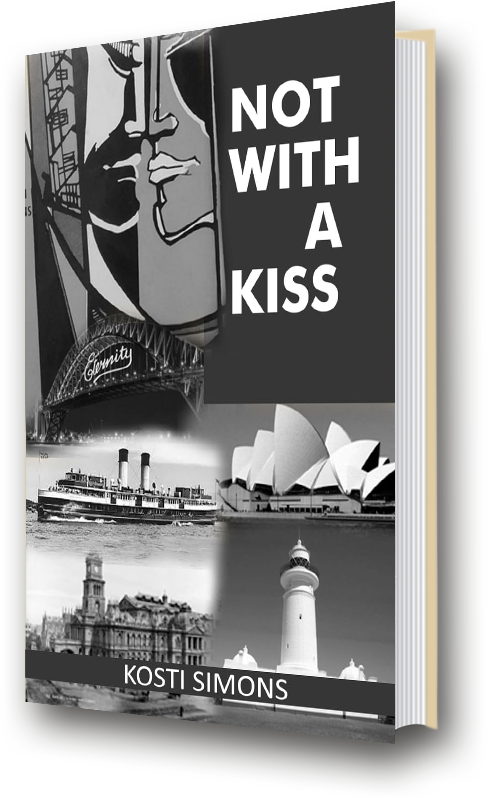
The Vine and Olive Publishers would like to present Kosti Simons literary work
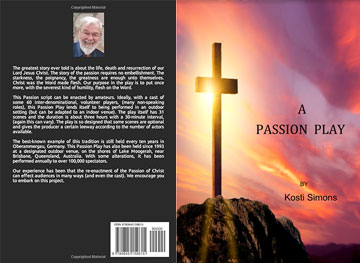
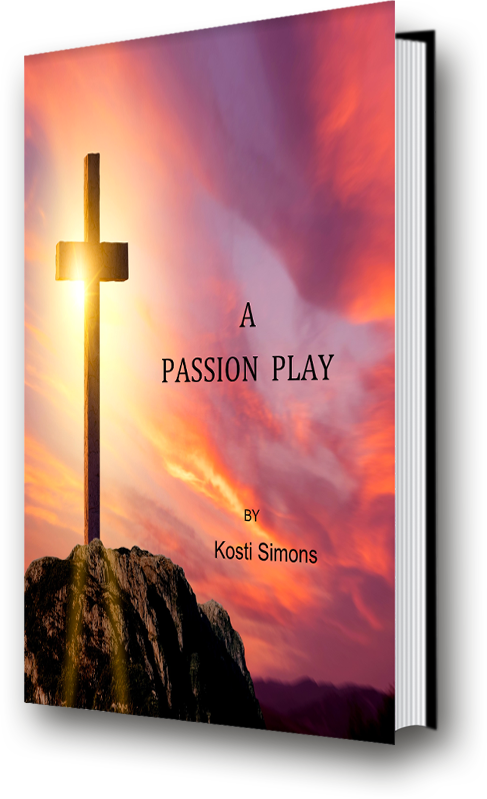
PASSION PLAY
T he greatest story ever told is about the life, death and resurrection of our Lord Jesus Christ. The story of the passion requires no embellishment. The starkness, the poignancy, the greatness are enough unto themselves. Christ was the Word made flesh. Our purpose in the play is to put once more, with the severest kind of humility, flesh on the Word.
Pilgrims in the days of his walk were rare creatures, and he felt the need with others to revive the spirit of pilgrimage. He founded the not-for-profit Pilgrims International, and led groups a biblical 40 days from the French Pyrenees to Santiago. Just one year before Covid-19 flattened the world, over 300,000 pilgrims arrived in Santiago.
What may lift this book from the pedestrian, so to speak, into the heavenlies, are the dialogues Kosti has with Our Lord Jesus Christ.
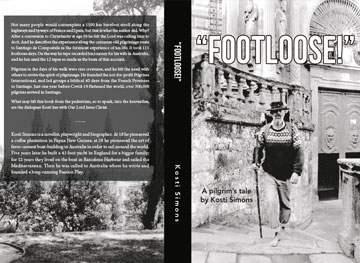
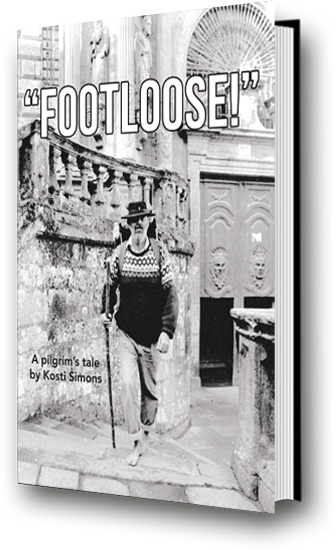
FOOTLOOSE!
N ot many people would contemplate a 1500 km barefoot stroll along the highways and byways of France and Spain, but that is what the author did. Why? After a conversion to Christianity at age 50 he felt the Lord was calling him to do it. And he describes the experience along the centuries-old pilgrimage route to Santiago de Compostela as the foremost experience of his life. It took 111 footloose days. On the way he tape-recorded his journey for his wife in Australia, and he has used the 12 tapes so made as the basis of this account.
What may lift this book from the pedestrian, so to speak, into the heavenlies, are the dialogues Kosti has with Our Lord Jesus Christ.
Pilgrims in the days of his walk were rare creatures, and he felt the need with others to revive the spirit of pilgrimage. He founded the not-for-profit Pilgrims International, and led groups a biblical 40 days from the French Pyrenees to Santiago. Just one year before Covid-19 flattened the world, over 300,000 pilgrims arrived in Santiago.
What may lift this book from the pedestrian, so to speak, into the heavenlies, are the dialogues Kosti has with Our Lord Jesus Christ.
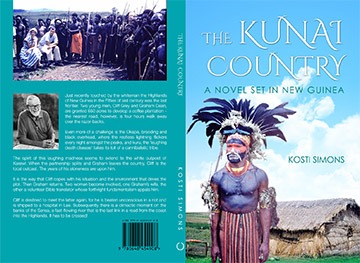
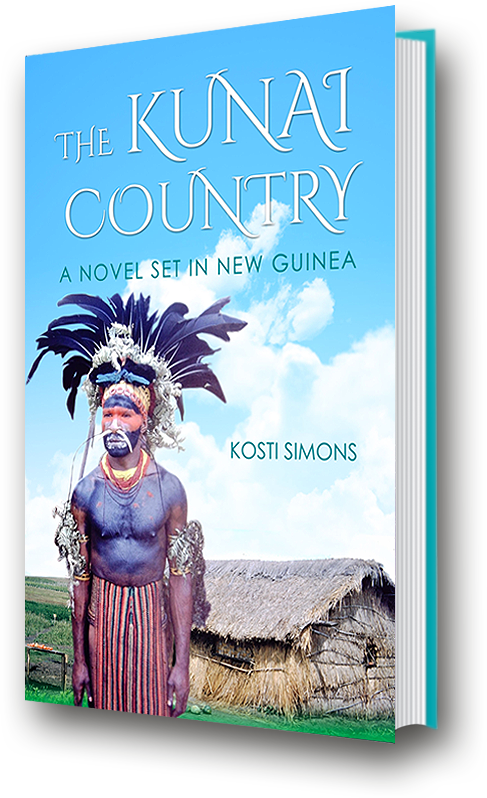
A NOVEL set in Papua New Guinea
J ust recently touched by the whiteman the Highlands of New Guinea in the Fifties of last century was the last frontier. Two young men, Cliff Grey and Graham Dean, are granted 650 acres to develop a coffee plantation – the nearest road, however, is four hours walk away over the razor-backs.
Even more of a challenge is the Okapa, brooding and black overhead, where the restless lightning flickers every night amongst the peaks, and kuru, the 'laughing death disease' takes its toll of a cannibalistic tribe.
The spirit of this laughing madness seems to extend to the white outpost of Karawi. When the partnership splits and Graham leaves the country, Cliff is the local outcast. The years of his aloneness are upon him.
It is the way that Cliff copes with his situation and the environment that drives the plot. Then Graham returns. Two women become involved, one Graham's wife, the other a volunteer Bible translator whose forthright fundamentalism appals him.
Cliff is destined to meet the latter again, for he is beaten unconscious in a riot and is shipped to a hospital in Lae. Subsequently there is a climactic moment on the banks of the Sensa, a fast-flowing river that is the last link in a road from the coast into the Highlands. It has to be crossed!
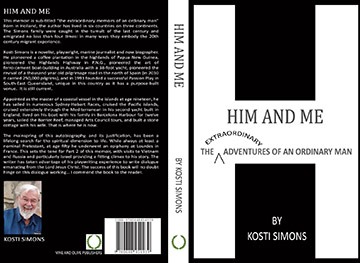
An AUTOBIOGRAPHY set in 6 countries
T his memoir is of the "search for meaning" category, in the style of Victor Frankl or C.S. Lewis: it spans 82 years. While the author considers himself an Australian, he has lived in six countries. His family was caught in Holland during the tumult of the Great Depression and migrated to Africa, where the subsequent war was far away, but its effect close and personal. In the end the Simons seniors emigrated no less than four times -- in many ways they embody the 20th century migrant experience. For detail, please scroll down to "About the Author".
The mainspring of this autobiography, and its justification, has been a lifelong search for the spiritual dimension to life. While always at least a nominal Protestant, at age fifty he underwent an epiphany at a Catholic Marian shrine in Lourdes, France. This sets the tone for the second part of this memoir, with visits to Vietnam and Russia and particularly Israel providing a fitting climax to his story. The writer has taken advantage of his playwrighting experience to write dialogue emanating from the Lord Jesus Christ. The justification for this book hinges on the relationship the author has with Jesus Christ, and he hopes this love will manifest to the reader so that his/her faith is increased....
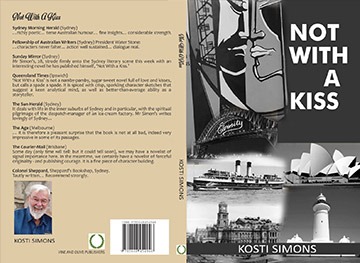
A NOVEL set in Sydney, Australia
T This novel was self-published in 1962 to crtitical acclaim (see reviews hereunder) but revised in 2018. Set in inner suburban Sydney in the 50s, we meet Ava King at the climax of his life. On the verge of a mental breakdown, he must face events that isolate him from his fellows. Yet through him is expressed a universal theme--that man's spirit remains forever indomitable no matter the adversity.
Gradually we see the threads of his life drawn up and woven together. We meet his cold, estranged wife: his son, whose involvement in a tragic killing is both the result and manifestation of a secret guilt gnawing at the father's mind. And we meet the two women who help to resolve the guilt of father and son -- the lover with whom both seek physical escape, and the gentle deaconess who is the embodiment of Christian love.
Sydney in the 50s is lovingly described, and "Mr Eternity" plays a small part in the plot, but essentially it is the story of a man who journeys from being a Rat in Tobruk to being a new man in Newtown.
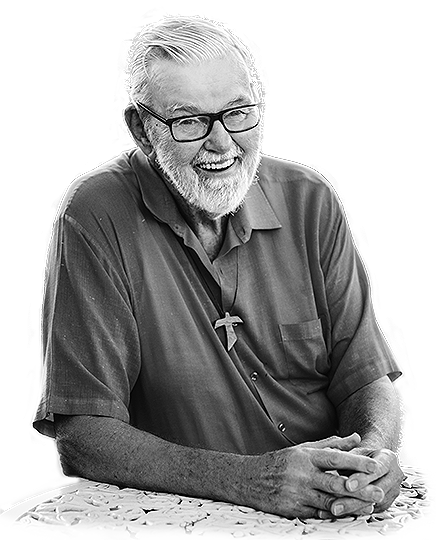
Kosti had a conversion experience in Lourdes, France in 1986. And soon after, the family moved into an apartment above the only English speaking church; Kosti as a volunteer.
Kosti spent 111 days on a solitary pilgrimage from Paris to Santiago de Compostella. As a result of which, he founded an organization to encourage walking pilgrimage as a spiritual exercise. The Road to Santiago dates back to the tenth century but had fallen into disuse. In 2017, no less than 250,000 pilgrims registered in the cathedral at Santiago. He also organized pilgrimages between Glasgow and the Isle of Iona; and between London and Canterbury.
In 1990, the family returned to Australia because of a call from the Lord to found a Passion Play. The Lord provided a magnificent site between mountain and lake on the shores of Lake Moogerah. First performances were given in 1993 and it remains an annual event: it is the only purpose-built site for a Passion Play in Australia. Then, in 1999, Kosti received the vision for the establishment of a living spiritual museum entitled the House of Living Water. This has not yet been accomplished.
Literary Works and Plays
Kosti has written novels, plays and an autobiography. Below is a list of published works or public performance, together with a selection of critical appraisals.
For over fifty years Kosti's output has also included writing yachting and marine articles for publication in Australia, the U.K. and Spain.
The Kunai Country
Fassifern Guardian 05/12/18
The Kunai Country gives a superb word-picture of Papua New Guinea in the 1950's
with a style of
writing, both literary and conversational, that once prompted a remarkable
tribute by the late P.R.
"Inky" Stephenson (an Australian literary critic rated a talented writer and
brilliant editor), who
wrote: "Kosti Simons is the first Australian novelist to compare in style and
power with Hemingway
and Faulkner."
Kosti also has a great eye for detail, noting background minutiae -- such as a
drill sergeant
marching his squad -- that breathe extra life and interest into otherwise simple
story development
situations.
And he supports his characters and plot with an appropriate mix of
philosophising and introverted
contemplation, explaining at one stage a character's confused thinking: When
the mind has little
nourishment it chews on straw.
Kosti is well qualified to write such a story. As a young man he developed his
own 650-acre coffee
plantation in the same region.
Which explains his mastery of words when describing the savage splendour that
backdrops his
novel.
Descriptions such as: Outside the air was warm, even fetid, the Karawi Valley
was like a womb giving
birth to darkness.
Or: the mountains appeared to go up another mile or two, an immense battlement
in episcopal purple.
For headgear, cloud such as he had never seen before. Anywhere.
Frank Hampson
Not with a Kiss
The Sydney Morning Herald (Sydney) 22/09/62:
...richly poetic... terse Australian humour... fine insights... considerable
strength
Fellowship of Australian Writers (Sydney):
President Water Stone: ...characters never falter... action well sustained...
dialogue real.
Sunday Mirror (Sydney) 07/10/62:
Mr Simon's, 28, strode firmly onto the Sydney literary scene this week with an
interesting novel he has published himself, 'Not With a Kiss.'
Queensland Times (Ipswich) ?/11/62:
'Not With a Kiss' is not a namby-pamby, sugar-sweet novel full of love and
kisses, but calls a spade a spade. It is spiced with crisp, sparkling character
sketches that suggest a keen analytical mind, as well as better-than-average
ability as a storyteller.
The Sun-Herald (Sydney) 23/09/62:
It deals with life in the inner suburbs of Sydney and in particular, with the
spiritual pilgrimage of the despatch-manager of an ice-cream factory. Mr Simon's
writes lovingly of Sydney...
The Age (Melbourne) 24/11/62:
... it is therefore a pleasant surprise that the book is not at all bad, indeed
very impressive in some of its passages.
The Courier-Mail (Brisbane) 06/10/62:
Some day (only time will tell: but it could tell soon), we may have a novelist
of signal importance here. In the meantime, we certainly have a novelist of
forceful originality - and publishing courage. It is a fine piece of character
building.
Colonel Sheppard, Sheppard's Bookshop, Sydney, 1962.
Tautly written... Recommend strongly.
Downfall
Sydney Morning Herald (Sydney) 06/10/64:
Simons won the award from 64 other entries with his play Downfall. Set in the
Western Australian desert country with a cast of four men.
Sunday Mail (Brisbane) 04/10/64:
Sydney author, Kosti Simons, has been named as winner of the centenary year
playwriting competition conducted by the North Queensland Drama Festival
committee, with his play entitled, Downfall, by the adjudicator Mr John Trevor
(Australian Elizabethan Trust).
Townsville Bulletin (Townsville) 01/10/64:
It is a drama based on an authentic happening and was chosen from entries
received from all parts of Australia.
Queensland Times (Ipswich) ?/10/64
Play-writing contest to Sydney man. Downfall will be performed early next month.
Full Cry
Sun Herald (Sydney) 25/10/64
Robin Lovejoy has four more plays coming up in his series of play-readings at
the Old Tote, which are, he stresses, designed for the development of the
Australian playwright.